13 February 2013

REVIEW: SISTER ASSASSIN

Author: Kiersten White
Series: Yes, #1
UK Publisher: Harper Collins Children's Books
UK Release date: 19th February 2013
Genre: YA Paranormal
Kindly given by the publisher for an honest review

She never chose her deadly gift but now she’s forced to use it. How far would you go to protect the only family you have left?
Annie is beset by fleeting strange visions and a guilty conscience. Blind and orphaned, she struggles to care for her feisty younger sister Fia, but things look up when both sisters are offered a place at Kessler School for Exceptional Girls.
With Annie trapped in Kessler’s sinister clutches, instincts keep Fia from killing an innocent guy and everything unravels. Is manipulative James the key to the sisters’ freedom or an even darker prison? And how can Fia atone for the blood on her hands? (Goodreads)


Having just finished the Paranormalcy series by Kiersten White, I was completely surprised and blown away at how different this book was in writing style. Sister Assassin was punchy, intense and gripping; a fast paced roller coaster ride. One minute I was thinking and expecting one thing, and then a few pages later everything had changed to make me think otherwise. The plot and structure certainly kept me on my toes.

Fia and Annie were both plunged into this strange, deceptive world after the death of their parents. Unlike the school Annie is expecting it to be, it turned out to be far more dangerous and really pushed Fia to her limits. Having been tested and manipulated so much, Fia was both incredibly strong and clever and yet also so hurt and broken. I really felt for her and wanted her to outwit the deceitful people around her.

With first-person dual narratives from both Fia and Annie’s perspectives, these gave a lot of insight into their feelings, and often their guilt concerning their sister. It could be a little difficult to keep track of who was talking and when, because the narratives would also jump forward and backward in time, but I enjoyed trying to piece together what had happened and where the story was at.

I found it so intriguing and yet sad that both Fia and Annie would make decisions based on their sister. Neither of them was happy because they felt guilty or responsible for their sister, worrying that they were holding them back and trapping them in their situation. Sadly neither of them really understood how the other felt and they kept trying to do the best for the other but it often didn’t work out for the best.

The paranormal element to the story was the existence of seers and readers. I loved these different abilities people had within the story, and the mystery behind Fia’s ability. I didn’t understand what exactly she could do for a long while, but I enjoyed the way she messed with other people’s abilities, screaming swear words or annoying pop songs in her head to put off the mind readers. Apart from Tia and Annie, I didn’t trust any of the other characters or didn’t know if I could trust them so I found it amusing when she did this.

Sister Assassin is a short, sharp, punchy read with lots of action and mystery that will keep you glued to the pages.


Rating: 5*

6 February 2013

REVIEW: HEART-SHAPED BRUISE

Author: Tanya Byrne
Series: No, standalone
UK Publisher: Headline
UK Release date: May 2012
Genre: YA

They say I'm evil. The police. The newspapers. The girls from school who shake their heads on the six o’clock news and say they always knew there was something not quite right about me. And everyone believes it. Including you. But you don't know. You don't know who I used to be. 
Who I could have been.
Awaiting trial at Archway Young Offenders Institution, Emily Koll is going to tell her side of the story for the first time.


Heart-shaped Bruise is the story of a young girl in a youth offending institution. Emily is the bad girl – other girls in the institution fear her, and it’s obvious she’s done something awful to end up there. I wondered at first if I could have sympathy with her; with a girl who offers no regrets or apologies to the girl she victimised. But when I started listening to her story I instantly suspended all doubts and judgements, and was completely riveted by Emily’s account of why she did what she and the msytery of what had actually happened.

Written in a diary, Emily pours her feelings and memories onto the pages and also recalls the sessions with her psychiatrist. I loved the variation between the two; with the psychiatrist, there were things she is pushed to think about, and things she tries to hold on so tightly to. What she said to the psychiatrist was just as revealing as what she didn't say, and I loved the interaction between Emily and Doctor Gilyard. Writing in her diary, Emily was a lot less reserved and more honest about her feelings and the past, whilst in contrast her sessions showed her very slowly changing and moving into a new future.

Despite the fact that Emily bitterly wanted to get revenge on Juliet, I loved the way she still felt respect and admiration for her. I found this fascinating and still can't decide if it makes me feel more or less sympathy with her. These psychological and emotional elements to the story made it gripping, and Tanya's writing really made the characters feel alive.

Although I won't give spoilers, I will say that Tanya Byrne could have very easily written an ending that was happy or gave a definite outcome and resolution. But she didn't; and I like that. I think a happy ending would have felt like it was done for the sake of it. Okay, so yes, I still had questions at the end and I wanted to know for certain what happened to particular characters, but I liked the ambiguity and the fact that you could fill in the gaps for yourself.

Heart-shaped Bruise is a gripping tale of a young girl led down a troubled path.

Rating: 5*

4 February 2013

A - Z OF PEOPLE WATCHING: L IS FOR LYING

As children, and still as adults, we are told that lying and purposely misleading or deceiving others is bad. Does that then mean that any lie we might tell instantly makes us a bad person? And what of characters that lie? Can you ever like a character that lies?

L is for Lying

Despite the fact that we are taught that honesty is best, research conducted by Bella DePaulo showed that people lie at least once or twice every day. And if I was really honest, I could probably count myself with these people. But I wouldn't say I was a bad person.

Recently I thought I was buying a particular service only to realise later that it wasn't what I had thought it was. In fact it was a poor substitute. This deception really annoyed and frustrated me. But is it any different to when I tell a friend that a new haircut or item of clothes looks good (when in fact it really doesn't)? Both are lies. But the purposes are different. Whilst the shop I went to gained extra profit from their deception, I didn't really gain much from lying to a friend. Except perhaps maintaining a positive relationship. 

So do these little lies I tell make me a bad person? Would society be a better place if we didn't lie at all? Or are some little lies that smooth over social interactions a necessary evil? Many people believe that if we didn't have these little 'white' lies, then society would be very different, and not for the best either.

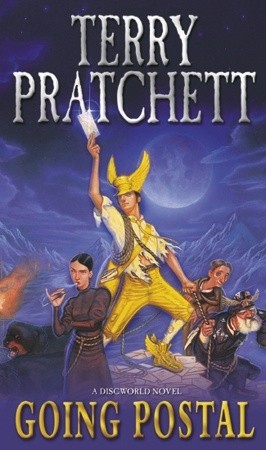
What I loved about the main character, Moist von Lipwig, in Terry Pratchett's Going Postal is that he cheats, cons and tricks his way through life. In fact, lying and disguising his true self has become second nature to the point where being himself makes him feel naked and vulnerable. He barely even recognised how his tricks and lies might affect other people and and enjoyed the thrill of getting away with his scams and schemes. 
"No one had bothered him. No one had looked at him twice; no one ever did. The city gates had indeed been wide open. The plains lay ahead of him, full of opportunity. And he was good at parlaying nothing into something. For example, at the first little town he came to he'd go to work on this little old nag with a few simple techniques and ingredients that'd make it worth twice the price he'd paid for it, at least for about twenty minutes or until it rained. Twenty minutes would be enough time to sell it and, with any luck, pick up a better horse worth slightly more than the asking price. He'd do it again at the next town and in three days, maybe four, he'd have a horse worth owning."
But despite all these things, I liked him. I really, really liked him. If he was just a liar and conman, then I wouldn't have. But he was more than that: he changed and grew. Meeting a rather brusque young lady helped him to slowly start seeing the error of his ways. He found somewhere that needed his charm and cheeky talk. He found someone that cared for him; someone he could care for; and he wanted to be better.

Like many of the people in DePaulo's study, I don't lie to hurt others or to necessarily gain anything. None the less, I do lie. But these lies aren't the whole of me, they don't define me; they allow me to get on better with other people. This might not be the case for everyone, but when it comes to book characters, I think we can like characters that lie if they aren't the defining feature of them. If there is more to them than lies. If there are other things that they care about.

Could you ever like a character that lies?

30 January 2013

REVIEW: MOCKINGBIRD

Author: Chuck Wendig
Series: Yes, #2
UK Publisher: Angry Robot
UK Release date: September 2012
Genre: Urban fantasy
Kindly given by the publisher for an honest review

Miriam is trying. Really, she is. But this whole "settling down thing" that Louis has going for her just isn't working out. She lives on Long Beach Island all year around. Her home is a run-down double-wide trailer. She works at a grocery store as a check-out girl. And her relationship with Louis--who's on the road half the time in his truck--is subject to the piss and vinegar Miriam brings to everything she does. It just isn't going well. Still, she's keeping her psychic ability--to see when and how someone is going to die just by touching them--in check. But even that feels wrong somehow. Like she's keeping a tornado stoppered up in a tiny bottle. Then comes one bad day that turns it all on her ear. (Goodreads)

I implore you, if you haven't yet read Blackbirds, go read it. In the second in the series, Miriram Black returns in another no-holds barred thriller. Some people might find Miriam's restlessness, recklessness and open approach to sex and alcohol a little sexist. But I enjoy her directness which is refreshing and humorous. She is very rough on the outside, but the more you get to know Miriam, with her hidden past and guarded emotions, you can see the soft inside.

When the story first starts things are very different. Miriam has tried to settle down with Louis, by living in a trailer and working in a supermarket. But Miriam lives for the nomadic life, chasing after those death visions. And unfortunately she doesn't do right by Louis. She's a little hard to sympathise with to start, but stick with her. Miriam has balls, guts and yet shockingly, a heart. The strange and sickening visions she sees at Caldecott girls school bring out the best and worst in Miriam. Although no-one could blame her for her actions. In particular, Wren, a young girl at the school, seems to capture her heart and an almost maternal-like protective instinct.

With a thrilling, action packed and sometimes gory plot, Miriam's attempts to unearth a masochistic killer kept me on my toes. I truly wanted Miriam to find out what was going on, but you know that she's going to get into trouble along the way. Even though she is a tough old girl, Miriam can only take so much of a beating.

The bird theme really took off in this book, symbolically referring to different birds as clues and riddles on a number of occasions, but also appearing as a hallucination to Miriam. I was a little wary of this 'trespassing' crow because I honestly couldn't tell what the purpose of her supposed hallucinations were and whether the crow meant to be good or bad. But I am really interested to see how things develop in the final book, Cormorant, and whether the crow still stays with her.

Mockingbird is a hard edged thriller, with gory action and plenty of mystery. Handle with care.

Rating: 4*

27 January 2013

A - Z OF PEOPLE WATCHING: K IS FOR KISSING

Call me old fashioned, or perhaps a romantic at heart, but a kiss, especially a first kiss, should be a very special thing. 

K is for Kissing

What I love, is that there are so many different types of kisses. Kisses for every person, and for every occasion. As someone once said, you wouldn't kiss your mother like you would kiss your lover.

There are the friendly greetings, or cheek kisses. Sometimes you might not even make actually contact with the other person, particularly if you don't know or like the other person very well.

There's the tentative kiss for not quite friends, not quite lovers. This kiss involves a whole dilemma of where you should actually aim for when kissing them. Cheek or lips? In the most awkward of situations, one person will be aiming for somewhere different to the other person, and there will be an inevitable bumping of noses. How embarrassing!

More comfortable couples will often share a quick peck.

And if you happen to be out on the town of a Saturday night you might see the full-on snog. Full of passion, emotion and plenty of tongue, thankfully you don't see this too often in public.

Then there is the first kiss; my favourite to read about or watch on screen. A perfect first kiss should be a mix of tentative nerves, excitement, desire, shyness and longing. And if there has been a build up to the kiss, all the better. Think Leonardo and Clare in Romeo & Juliet.

For a first kiss, I simply adore the following passage from Seraphina by Rachel Hartman:
If I could keep a single moment for all time, that would be the one.
I became the very air; I was full of stars. I was the soaring spaces between the spires of the cathedral, the solemn breath of chimneys, a whispered prayer upon the winter wind. I was silence, and I was music, one clear transcendent chord rising toward Heaven. I believed, then, that I would have risen bodily into the sky but for the anchor of his hand in my hair and his round, soft, perfect mouth.
There is something so magical, beautiful and pure about the way Rachel Hartman has written this kiss. Rather than a blow by blow account, Seraphina's account focuses on the emotional impact of how it makes her feel.

Do you have a perfect book or movie kiss?

23 January 2013

REVIEW: CARRIE

Author: Stephen King
Series: No, standalone
UK Publisher: Hodder & Stoughton
UK Release date:
Genre: Horror/thriller

Carrie White is no ordinary girl.
Carrie White has the gift of telekinesis.
To be invited to Prom Night by Tommy Ross is a dream come true for Carrie - the first step towards social acceptance by her high school colleagues.
But events will take a decidedly macabre turn on that horrifying and endless night as she is forced to exercise her terrible gift on the town that mocks and loathes her . . . (Goodreads)

Despite having watched a number of films based on his books, I have never actually read any of Stephen King's books. Reading Carrie, I was not disappointed.

Sixteen year old Carrie is an unusual protagonist. Not because she has rare telekinetic powers. But because she is the girl that everyone picks on and nobody likes, and she passively accepts the abuse and taunts thrown at her. To start with I empathised with her, but didn't really sympathise with her or even like her that much. Perhaps because the start was written in third person perspective, it kept the bullying and Carrie at a distance. But as the narrative switched to Carrie's first person perspective and sometimes her mothers, I began to understand how tough her home life was and why she was the she was.

And I also started to hate her mother. A zealous, religious fanatic, she put Jesus, righteousness and atonement above all else, including Carrie. Her mother seemed completely oblivious to Carrie's needs or the psychological trauma she was suffering. Although Carrie started off as a passive character, accepting her mother's and peer's abuse, her developing telekinetic powers gave her the courage to stand up to her mother. It was great to see Carrie refuse to bow to her mother's ridiculous beliefs and demands, however Carrie went too far in the end. Really though, who could blame her. And despite the horrors of what happened, part of me was a little bit glad that Carrie was able to exact revenge of those mean people that had bullied her for so long.

The narrative changed quite regularly, quoting articles/papers one page and then quickly changing to a character's point of view. Sometimes these perspectives overlapped, and it could be a little confusing to keep track of. However you got to see each of the characters differing thoughts and feelings about a particular event and somehow still flowed and kept up a fast pace.

From the very outset, we knew something bad would happen at the end of the story, although I had no idea what exactly that would be. We do know Carrie is not only the instigator but also cause for national concern. Because of this my curiosity was instantly piqued, and there was a gradual build up of tension and suspense throughout the plot, with flashbacks and new experiences telling Carrie's story and giving the backstory to the final climatic events. Carrie's story, whilst deep troubled was also very gripping and sad. I sped through the pages with ease, and understand now why Stephen King's writing has captured the attention of so many.

Carrie is a twisted psychological thriller horror, and a brilliant read.

Rating: 5*

20 January 2013

A - Z OF PEOPLE WATCHING: J IS FOR JUSTICE

To be honest, this post was meant to be about a different topic, but then I started reading a new book and I just had to change the theme.

J is for Justice

I wanted to write about justice because of the book I'm reading, but thought I would struggle to think of something 'real' to go with it. I haven't had any run-ins with the police (except for when my car got broken into many years ago), and I haven't ever really felt that I've suffered an injustice. But something that keeps coming up with these posts is that life isn't made up of big events. It’s made up of a series of little things. And these little things can often weigh on us as much as the big things.

The other night I was awoken at 1am by shouting and banging. Being a nosy neighbour I had to look out the window. I saw a man jump into a van and race off down the street. No big deal. Except I'm pretty sure I saw the van bump another car. Okay, so I didn't have my glasses on, but yeah he scratched it. But I keep telling myself it may or may not have happened, because I felt bad about not doing anything with the information. I figured there was no point in finding this other neighbour and saying some van bumped your car, but I can't tell you the license plate of the van or what the man looked like. So I did nothing. But I feel very guilty, firstly because I feel like some sort of accomplice. But also because I know the car-owner is unable to get any justice for the wrong that has happened to them.

Whilst this may seem like a silly thing, having done a little research on the concept of justice, it seems that fairness and justice may be 'wired' into our brains and might go someway to explaining my feelings of guilt.

I also discovered there are different types of justice including distributive justice (where someone gets what they deserve) and retributive justice (punishment for a wrong doing), which is what my neighbour will never get. Immediately these concepts struck a chord with what I was reading about in Heart-Shaped Bruise by Tanya Byrne and what the main character Emily was trying to achieve.

The story is absolutely captivating, and is unlike a lot of other books in the YA market. Emily is the bad girl that everyone is scared of. She’s in prison and she is by no means the archetypal protagonist. She’s obviously done some very bad things. But as I read more and more, I started questioning just how bad her actions were. Were they justified to any degree? To Emily, her actions were based on exacting justice; evening an injustice.
But that’s not why I did it. You must know that, otherwise you wouldn’t be asking. So, okay, you want to know why? This is why: you stabbed my father. That’s it. What don’t you understand? China shop rules, Juliet: you break it, you pay for it, and you broke me. You got what you deserved.
What I love about the story is that it isn’t a black/white answer of whether Emily was wrong, or whether she’s bad. Life doesn’t work like that. And whilst legal justice might be more black and white than grey, distributive and retributive justice come in varying shades of grey.

16 January 2013

REVIEW: WITHER

Author: Lauren DeStefano
Series: Yes, #1
UK Publisher: Harper Collins
UK Release date: August 2011
Genre: Dystopian

By age sixteen, Rhine Ellery has four years left to live. She can thank modern science for this genetic time bomb. A botched effort to create a perfect race has left all males with a lifespan of 25 years, and females with a lifespan of 20 years. When Rhine is kidnapped and sold as a bride, she vows to do all she can to escape. Her husband, Linden, is hopelessly in love with her, and Rhine can’t bring herself to hate him as much as she’d like to. But Rhine quickly learns that not everything in her new husband’s strange world is what it seems. Will Rhine be able to escape--before her time runs out? (Goodreads)

I've had this book on my kindle for quite a while now, but never got around to reading it. But I'm really glad I did.

When Rhine was kidnapped, she was thrown into this bizarre world in which she was one of three wives to a rich young man looking to have children. What fascinated me most about the story was how each of the wives, really only teenagers, reacted to their new life and learnt to cope. This idea of kidnap and luxurious entrapment really made me think; if I knew I had to spend the rest of my life living in a luxury prison, would I adapt quickly for an 'easy' life or would I never be able to forgive and forget my past life? I guess if this new life was better than your old life (as in Cecily's case, where she had been a poor orphan), perhaps it wouldn't be so bad to live a rich and frivolous life no matter how fake and contrived. In contrast Rhine and Jenna were both strong willed and determined to never forget their past and family.

Despite Linden and his father's attempts to make the family situation seem happy, the reality was creepy, chilling and a little despicable. Touching on issues of polygamy and pedophilia, the story evoked such conflicting emotions in me. On one hand, I found the idea of 13 year old Cecily carrying a child for her husband really sickening. How could such a young girl really understand the situation she was in? And how could Linden not understand what he was doing? But on the other hand, her naivety probably made it easier for her to cope and adapt. Whilst Jenna and Rhine fully understood the gravity of their imprisonment and what they had lost, it was practically impossible for them to come to terms with this new life. It made me feel so sad and angry that they had been ripped from their lives to become sister wives.

Given her situation, Rhine was a wonderfully strong character. In her situation, so many girls could have had a complete breakdown, turned very bitter and angry or just weakly caved in to the situation. But she was kind to the servants, smart and cunning and never gave in to Linden's advances. Her growing attachment to sweet young Gabriel was one of the few lights of hope in that horribly dark house and I really wanted something to develop between them. I also grew to like sullen Jenna, who was quietly shrewd and observant but never let her past life fade.

Wither combines an intriguing and thought provoking plot with wonderfully written and contrasting characters.

Rating: 4*

13 January 2013

A - Z OF PEOPLE WATCHING: I IS FOR IMPERFECTIONS

I recently found a great post (as part of a larger author-contributing website) on writing for a YA audience. Alane Ferguson* says that a young audience won't believe or relate to a character that is too wise or too level headed for their age.

I is for Imperfections

I would go one step further and say, regardless of the genre or audience, any perfect character is surely unbelievable; ideal, maybe, but unbelievable because no-one is perfect.

I love my boyfriend, friends and family, but I'm not naive enough to think they are without their faults (sorry folks!). Regardless of these though I still love them all, because that's who they are; the good comes with bad. And trust me, I definitely don't think I'm perfect either. I'm terrible at standing up for myself (even after a bad manicure in which I left with a cut finger, I still gave a tip!!!); I'm really not that bothered that my roots show through; and I leave tissues in my trousers pocket so that all the clothes come out of the washing machine scattered with a flurry of white fluff. I really can't sing, but in the car I love to do it at full volume; I bite my lip to shreds when I get nervous; and quite honestly I don't know what I'm doing career or aspiration wise.

But these flaws make me who am I; as your flaws make you who you are. But they shouldn't be forgotten when it comes to writing a character. Imperfections make the characters real, relatable and more interesting. Some of my favourite characters openly admit their faults, whilst others don't quite realise where they are going wrong.

But it's not just about the characters in isolation. Perhaps the underlying arc of the story is some sort of character development, or maybe a character's faults lead them down a certain path and thus informs the plot. These things couldn't happen if your protagonist is perfect to start with.

When I first started reading Stephen King's Carrie, I was surprised by how much of a train wreck sixteen year old Carrie was. She was a loner, completely oblivious to what was happening to her changing body, and passively accepted the taunts and teasing from the other school girls.
When Miss Desjardin led Carrie up to the office fifteen minutes later, the halls were mercifully empty. Classes droned onwards behind closed doors.
Carrie's shrieks had finally ended, but she had continued to weep with steady regularity. Desjardin had finally placed the napkin herself, cleaned the girl up with wet paper towels, and gotten her back into her plain cotton underpants.
She tried twice to explain the commonplace reality of menstruation, but Carrie clapped her hands over her ears and continued to cry.
To her peers Carrie had many, many faults, which they bullied her for. I empathised with her but found her a little hard to sympathise with to start. But as I discovered what her mother and home life was like, I began to understand why she was the way she was. Carrie is far from perfect, at the start or at the end of the story, but her quirks, imperfections and experiences influence how she behaves, drives the plot forward, and in the end make me understand her as a person (and maybe just a little, root for her too).

Do any of your favourite characters have any imperfections? ...Do you...?

*You can find Alane Fergus's post on Writing Imperfect Characters at Writing Teen Novels.

9 January 2013

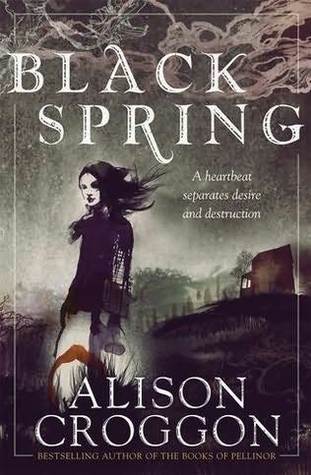
REVIEW: BLACK SPRING

Author: Alison Croggon
Series: No, standalone
UK Publisher: Walker
UK Release date: 3rd January 2013
Genre: Fantasy
Kindly given by the publisher for an honest review

Inspired by Emily Bronte’s Wuthering Heights, BLACK SPRING reimagines the passionate story in a fantasy 19th century society sustained by wizardry and the vengeance code of vendetta.
Anna spent her childhood with Damek and her volatile foster sister Lina, daughter of the Lord of the village. Lina has magical powers, and in this brutal patriarchal society women with magical powers are put to death as babies. Lina’s father, however, refuses to kill her but when vendetta explodes in their village and Lina’s father dies, their lives are changed forever. Their new guardian Masko sends Anna away and reduces Lina to the status of a servant. Damek—mad with love for Lina—attempts to murder Masko, then vanishes for several years. Anna comes home five years later to find Lina about to marry a pleasant young farmer, and witnesses Damek’s vengeful return and its catastrophic consequences. (Goodreads)


Black Spring is a re-imagining of the classic Wuthering Heights, embellished with fantasy elements. The story includes witches, wizards, and a strange vendetta that must down through families to enrich the King's coffers.With these fantasy elements, Black Spring will appeal to a new, younger audience that may not have already read Emily Bronte's classic, as well as fans of the tale.

I was surprised that in this retelling, the key plot points stayed the same but the character names had changed. Because of this, the start felt very different to the original and I had a little trouble trying to equate the characters in this book with the original (although I do realise that each book should be read on its own merits, and not compared, it is difficult for me to do with such a well known book). Having said this, I think the new names better suited the new setting and fantasy elements, rather than the historical, British feel.

The addition of the family vendettas, wizards and curses gave a more ominous backdrop to the doomed love between Lina and Damek, as well as adding interest and action to the plot. For me, it also gave credence to Lina’s (aka Cathy’s) behaviour and went a little way to explaining her drastic change in demeanour. Yes, I understand that Damek’s leaving would have caused Lina to be deeply upset, but I also think such a strong willed young woman would have more strength of character. And of course the wild character of Lina was perfectly suited to being a potential witch.

Just as with the original, Alison Croggon has created an atmosphere of gloom and despair in the isolated village, and this gloom haunts the characters throughout. If you enjoyed the original and like fantasy, or if you want to read a dark tale of despair, then Black Spring will be perfect.

Rating: 4*

6 January 2013

A - Z OF PEOPLE WATCHING: H IS FOR HOPE

As we celebrate the New Year, lots of us will be thinking of the year to come, what we hope to achieve, and possibly even making New Year's resolutions.

H is for Hope

Sadly lots of people I know in work scorn resolutions as a fad and a waste of time. I completely understand this; sometimes we might want to change something, but just don't have the desire or drive to do it. And this often leads to failure, and in turn to despair. But I always make resolutions. Yes, I really want to succeed and achieve the goals I set myself. But I also don't mind failing, because at least I will have tried.

Most people making resolutions will probably hope to lose weight, see family more often, get a new job or quit smoking. Mine are to grow my nails (not 'stop biting my nails' - as with hope, a resolution should be positive); finish writing a dystopian short story I started a while back; and travel more. Whilst hope is a key concept in lots of fictional writing, and is often a motivating force for change in the key characters, it's not often you read about characters in books wanting to achieve mundane goals like quitting a bad habit. (It's just not that interesting to read about.) But more common themes in YA are new relationships, being accepted by peers, or surviving life threatening situations.

If I thought people might read them all, I would give quotes from lots of books, including Debutantes by Cora Harrison, which is about four young sisters in the 1920s, each hoping and striving to escape their humdrum life and fulfil their career ambitions. Or from Whisper by Chrissie Keighery, which follows 16 year old Demi as she copes with becoming deaf. The whole story is wrapped up in feelings of hope and despair, fear and courage, and the emotional journey Demi goes through, from hopelessness to hope, is completely heart warming and touching.

The book I'm going to quote though is Partials by Dan Wells, because it looks at hope, not just to live, for the whole human race to survive. Set in the future, the human race is near extinction. Even the remaining survivors of a genetically engineered virus, RM, are unable to have babies that live passed a few days. Despite the government's attempts to find a cure, through enforced pregnancy (the Hope Act), there is little to be hopeful about. Yet, Kira wants to fight for the future and go out into unchartered territory to find a Partial so they can create a cure. There is no certainty that anyone will survive, but Kira has hope on her side. And if you don't have hope, what do you have?
"Of course it's worth it," said Kira. "Say that it's stupid, say that it's impossible, but never say that it's not worth it. We know full well that we might not be coming back alive, or successful, and I recognize that, and I wouldn't have suggested it if I wasn't ready to accept it. But Haru is right -- trading any of us, even trading all of us, for the chance to start a new generation of humans is more than worth it. If we can actually pull this off and use a Partial to cure RM, we're not just saving Maddy's baby, we;re saving thousands of babies, maybe millions of babies -- every human baby ever born for the rest of time. We're saving our entire species."
This was one of my favourite books of 2012, and I would definitely recommend reading it!

Do you have any hopes, aspirations or resolutions for the new year?

2 January 2013

REVIEW: THE LOST GIRL

Author: Sangu Mandanna
Series: No, standalone
UK Publisher: Random House Children's Publisher
UK Release date: 3rd January 2013
Genre: Dystopian
Kindly given by the publisher for an honest review

Eva’s life is not her own. She is a creation, an abomination – an echo. Made by the Weavers as a copy of someone else, she is expected to replace a girl named Amarra, her ‘other’, if she ever died. Eva studies what Amarra does, what she eats, what it’s like to kiss her boyfriend, Ray. So when Amarra is killed in a car crash, Eva should be ready.
But fifteen years of studying never prepared her for this.
Now she must abandon everything she’s ever known – the guardians who raised her, the boy she’s forbidden to love – to move to India and convince the world that Amarra is still alive ...


What I loved about The Lost Girl was how the story delved into Eva’s situation as a replica or 'other' – trying to balance the two conflicting sides to her life, each pulling her in a different direction. Eva was torn between doing what she was created as an echo to do, and discovery and expressing who she was as an individual. Receiving information from Amarra about her life and having to learn it as if it was her own life must have been difficult. Especially knowing you can never be yourself. And despite what some people thought, Eva did have a soul, a personality and her own thoughts and feelings. She was interesting and best of all didn't ever want to give up fighting. The idea that she couldn't be with the person she liked was really sad. On the flip side, it was interesting to hear snippets of how Amarra felt, having to share how every thought and every action with some stranger who might possibly usurp your life.

The concept of a replica to replace you when you die was also very thought provoking. How would I feel knowing there was a replica of me ready to jump into my shoes when I died? And is it right to create one in the first place? Surely echos only existed because families couldn't bear the thought of living without some they love, which is a nice thought but it's also selfish to some degree and doesn't allow the family to grieve properly when someone passes away. But once an echo has been created, it seems wrong to treat them as if they themselves are evil or soulless.

Aside from the concept behind the story, I also loved the writing which was natural and flowing. Although I expected Eva to become Amarra really quickly on, you actually get to see quite a bit of Eva as herself, struggling to cope with what is expected of her. I think this was a good thing though, as you feel the build up before she is thrust into her new life in India and can understand her fears about it. The plot focused a lot on Eva's emotional perceptions and the changes she undergoes, but there were also lots of suspenseful moments, when I was really worried that she might be found out, and plenty of action towards the end.

Although Eva grew up in England, Amarra lived in India. So for Eva, becoming Amarra was also a huge change in situation. I liked the contrast between the two places and how to some extent Eva already knew little bits of her new life. There were a few bugs for me, like Eva growing up in a country that would give her a different tan and accent to the real girl, but that's just me being ultra picky.

A stunning debut, The Lost Girl combines a brilliant concept with flowing writing to create a thought provoking dystopian.

Rating: 4*

30 December 2012

A- Z OF PEOPLE WATCHING: G IS FOR GRIEF

Until a few years ago, I had been lucky enough not to experience a close family death. At least not at an age where I could understand what was happening. 

G is for Grief

Then one night my sister called telling me my grandfather had fallen down the stairs and was in a bad way. I was concerned, but my grandps had always been so strong willed that I expected him to outlive everyone else. Early the next morning I had the call to say he'd passed away. But I just couldn't believe it. It was like he'd gone away and might come back at any time. Being told he was gone wasn't enough for it to fully sink into my brain. Rather than something I could grasp onto, death was the absence of something. Or someone.

The days running up to the funeral blurred into one, filled with endless tasks of cooking, cleaning and sitting around my nan's kitchen table. Anything to pass the time and forget for a short while. During those grey rainy days, whilst I tried to come to terms with what had happened, I also felt a horrible sense of guilt that I wasn't grieving properly. Was I sad enough? Why couldn't I cry? Unlike my other family members who were outwardly expressing their grief, I hadn't seen my grandpy fall, or seen him at the hospital afterwards. I had nothing concrete to attach to the idea that he was gone. I couldn't express something that wasn't real for me. It was only at his funeral as we buried the coffin that things really hit home for me.

Even now, years later, I still miss my gramps. The man who was the life and soul of any party. And who put up with me at age 7 telling him to get changed out of his paint splattered clothes when a 'boyfriend' was coming to visit. The hole that is his absense hasn't gone. It's merely covered over. Like a booby trapped hole in the woods, hidden under a fragile layer of leaves and twigs. You can't see it, but one day when you least expect it, you'll fall in.

In The Name of the Wind by Patrick Rothfuss, Kvothe describes four doors to cope with bereavement, which I think we can all relate to in some small way: sleep, forgetting, madness and death.
After my family was killed, I wandered deep into the forest and slept. My body demanded it, and my mind used the first door to dull the pain. The wound was covered until the proper time for healing could come. In self-defense, a good portion of my mind simply stopped working - went to sleep, if you will.
While my mind slept, many painful parts of the previous day were ushered through the second door. Not completely. I did not forget what had happened, but the memory was dulled, as if seen through thick gauze. If I wanted to, I could have brought to memory the faces of the dead, the memories of the man with the black eyes. But I did not want to remember. I pushed those thoughts away and let them gather dust in a seldom-used corner of my mind.
I dreamed, not of blood, glassy eyes, and the smell of burning hair, but of gentler things. And slowly the wound began to grow numb... 

Writing about the death of a loved one, even if fictionalised, can be difficult. And as a reader, the death of a character in a book can also be a big deal. So much so that you can feel some of the grief of losing them. But regardless of how the other characters grieve for the one they've lost - whether they cry, scream or merely carry on like normal - that expression of grief will be as individual as the character and their story. 

Have there been any books that have moved you?

28 December 2012

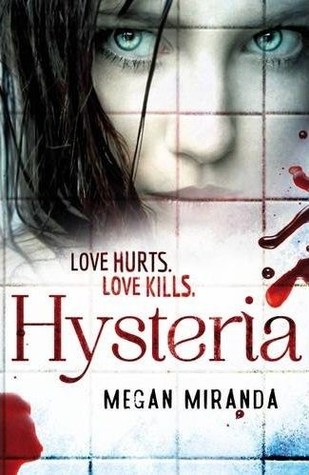
REVIEW: HYSTERIA

Author: Megan Miranda
Series: No, standalone
UK Publisher: Bloomsbury
UK Release date: 14th February 2013
Read via NetGalley

Mallory's life is falling apart. Her boyfriend was stabbed. He bled to death in her kitchen. Mallory was the one who stabbed him. But she can't remember what happened that night. She only remembers the fear ...When Mallory's parents send her away to a boarding school, she thinks she can escape the gossip and the threats. But someone, or something, has followed her. There's the hand that touches her shoulder when she's drifting off to sleep. A voice whispering her name. And everyone knows what happened. So when a pupil is found dead, Mallory's name is on their lips. Her past can be forgotten but it's never gone. Can Mallory live with that? (Goodreads)

I love Megan Miranda's writing style, and having read Fracture and now Hysteria, she has now become one of my favourite YA authors. There is something very natural and flowing about the writing, and I find her books very easy to read. I'm not the quickest of readers but I tore through the pages of Hysteria and finished it in less than 2 days (which is pretty fast for me). This is not only down to the writing, but also the gripping story.

All we know at the start is that someone died in Mallory's kitchen and she has obviously undergone a very traumatic experience. But we don't know the full story, so I was left guessing and speculating about whether Mallory was actually to blame and who might have died. My curiosity was certainly piqued, especially as Mallory's narrative showed how her mother feared her and certain people hated her. And although Mallory moves to boarding school to escape everything that happened, things still seemed to follow her. Her time at school was very creepy and chilling, and I was left with that spine tingling feeling of being watched. With so many strange things happening I was constantly suspicious of what other characters might be up to, if they were lying and whether Mallory was being haunted by a real ghost.

Mallory herself wasn't the most stable of characters; she was suspicious, paranoid and tense. But I still liked her. She tried to look out for other people but struggled to cope with the grief and mysterious goings-on. Through her memories I could also tell that she was a very loyal friend, and althoguh she wasn't the most outgoing bubbly person around, she was definfitely someone I would want to be friends with.

I would definitely recommend reading Megan Miranda's books, and as a standalone, Hysteria is perfect if you like a little bit of horror and tense chilling mystery. Hysteria is a creepy and mysterious thriller.

Rating: 4*

26 December 2012

MY TOP 5 YA BOOKS OF 2012

In order to pick out my 5 favourite reads of this year, I've very strictly had to pick only books that were released this year. Even so, it's been really hard to whittle my list down, as there have been so many good reads, but I've managed to pick one for five different sub genres within YA.

Dystopian - Breathe by Sarah Crossan
Published by Bloomsbury, October 2012

It's been hard to pick a favourite dystopian because this genre has bloomed. But I picked Breathe because the story is completely immersed in a ruined futuristic world which is so easily imaginable it's scary.

The world is dead. The survivors live under the protection of Breathe, the corporation that found a way to manufacture oxygen-rich air.
Alina has been stealing for a long time. She's a little jittery, but not terrified. All she knows is that she's never been caught before. If she's careful, it'll be easy. If she's careful.
Quinn should be worried about Alina and a bit afraid for himself, too, but even though this is dangerous, it's also the most interesting thing to happen to him in ages. It isn't every day that the girl of your dreams asks you to rescue her.
Bea wants to tell him that none of this is fair; they'd planned a trip together, the two of them, and she'd hoped he'd discover her out here, not another girl.
And as they walk into the Outlands with two days' worth of oxygen in their tanks, everything they believe will be shattered. Will they be able to make it back? Will they want to?


You can find my review here.


Paranormal - Everneath by Brodi Ashton
Published by Simon & Schuster, January 2012

As the plot counted down Nicki's remaining time before she is taken back to the underworld, the tension grew and grew. A very gripping story.

Last spring, Nikki Beckett vanished, sucked into an underworld known as the Everneath. Now she's returned--to her old life, her family, her boyfriend--before she's banished back to the underworld . . . this time forever. She has six months before the Everneath comes to claim her, six months for good-byes she can't find the words for, six months to find redemption, if it exists.
Nikki longs to spend these precious months forgetting the Everneath and trying to reconnect with her boyfriend, Jack, the person most devastated by her disappearance--and the one person she loves more than anything. But there's just one problem: Cole, the smoldering
immortal who enticed her to the Everneath in the first place, has followed Nikki home. Cole wants to take over the throne in the underworld and is convinced Nikki is the key to making it happen. And he'll do whatever it takes to bring her back, this time as his queen.
As Nikki's time on the Surface draws to a close and her relationships begin slipping from her grasp, she is forced to make the hardest decision of her life: find a way to cheat fate and remain on the Surface with Jack or return to the Everneath and become Cole's queen.


You can find my review here.


Science Fiction - Partials by Dan Wells
Published by Harper Collins, February 2012

I loved this book because of the post-apocolyptic setting and the strange partials that Kira is off to hunt. Nothing in this books is what it seems though.

The human race is all but extinct after a war with Partials--engineered organic beings identical to humans--has decimated the population. Reduced to only tens of thousands by RM, a weaponized virus to which only a fraction of humanity is immune, the survivors in North America have huddled together on Long Island while the Partials have mysteriously retreated. The threat of the Partials is still imminent, but, worse, no baby has been born immune to RM in more than a decade. Our time is running out.
Kira, a sixteen-year-old medic-in-training, is on the front lines of this battle, seeing RM ravage the community while mandatory pregnancy laws have pushed what's left of humanity to the brink of civil war, and she's not content to stand by and watch. But as she makes a desperate decision to save the last of her race, she will find that the survival of humans and Partials alike rests in her attempts to uncover the connections between them--connections that humanity has forgotten, or perhaps never even knew were there.


You can find my review here.


Fantasy - Seraphina by Rachel Hartman
Published by Random House Children's Publishers, July 2012

Rachel Hartman's debut features a brilliant fantasy setting and a female protagonist with a secret. Such a great read!

Four decades of peace have done little to ease the mistrust between humans and dragons in the kingdom of Goredd. Folding themselves into human shape, dragons attend court as ambassadors, and lend their rational, mathematical minds to universities as scholars and teachers. As the treaty's anniversary draws near, however, tensions are high.
Seraphina Dombegh has reason to fear both sides. An unusually gifted musician, she joins the court just as a member of the royal family is murdered—in suspiciously draconian fashion. Seraphina is drawn into the investigation, partnering with the captain of the Queen's Guard, the dangerously perceptive Prince Lucian Kiggs. While they begin to uncover hints of a sinister plot to destroy the peace, Seraphina struggles to protect her own secret, the secret behind her musical gift, one so terrible that its discovery could mean her very life.


You can find my review here.


Contemporary - Whisper by Chrissie Keighery
Published by Templar, July 2012

I loved the unique perspective of this book, as it shows how Demi copes with becoming deaf and trying to deal with all the usual teenage issues and communicating with everyone around her.

Fifteen-year-old Demi's world is shattered when she is left profoundly deaf by a sudden illness. Everything is different now, and Demi must learn to adapt to a new school, new friends and even learn a whole new language.

Whisper is a coming-of-age tale, about discovering who you are and where you fit in life. About friendships and first love and, most of all, learning to love the person you are.


You can find my review here.


What have been your favourite books this year?